What crypto casinos are, briefly
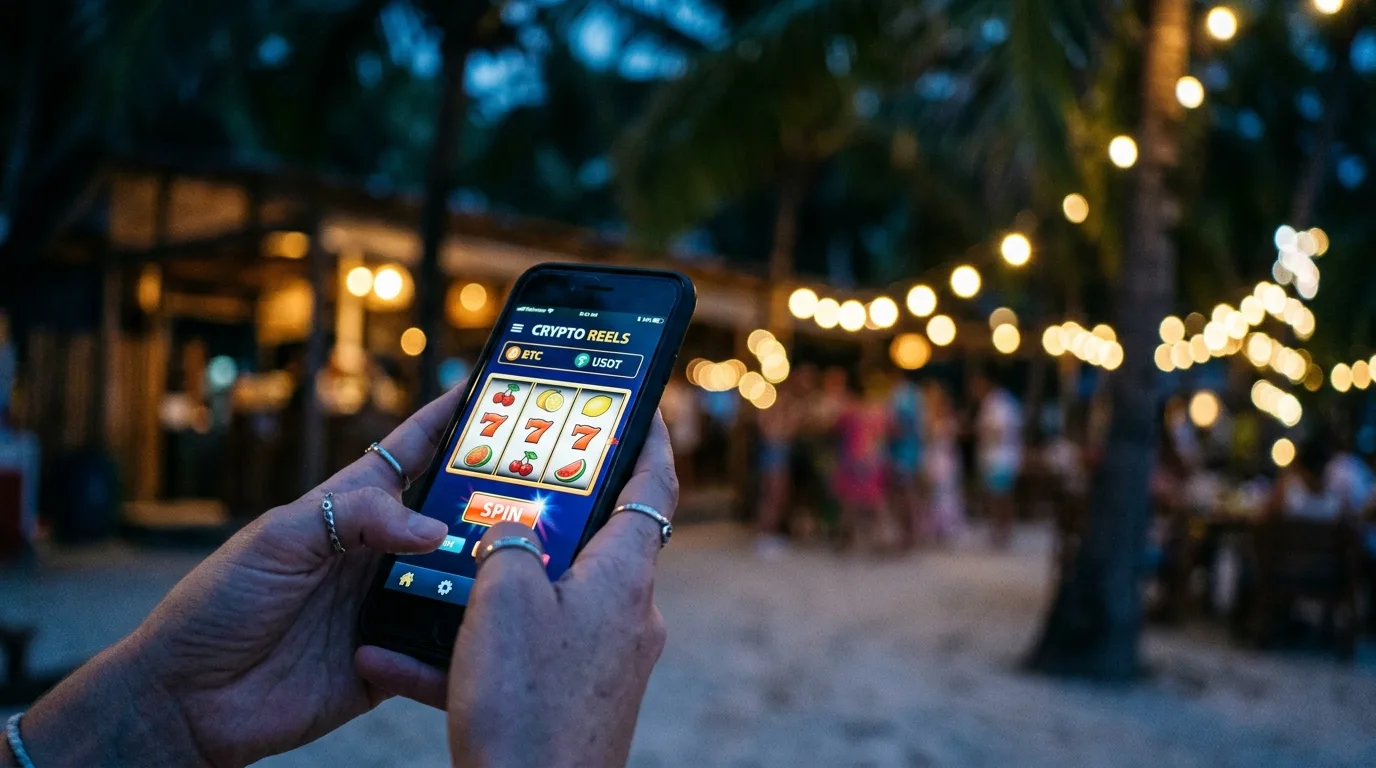
Crypto casinos are online gambling platforms whose gameplay and payment processing run primarily in crypto tokens rather than fiat currencies such as euros or dollars. Players deposit Bitcoin, Ethereum, USDT or other tokens into a casino wallet, play with them, and withdraw winnings in the same token form.
Technically these platforms are very similar to classic online casinos. They run on the same stack of web front-end, game engines from known software houses and a licence infrastructure. The difference lies in the payment route and the typical licence origin. Most pure crypto casinos do not hold a Maltese MGA licence, but a Curaçao licence, occasionally an Antigua, Anjouan or Costa Rica licence. Some operate without an identifiable licence, or the stated licence cannot be verified in the register.
In the market view, several names stand out among the crypto casinos active towards the Austrian public. Platforms such as Stake, Roobet, Bitstarz, Bitcasino, 7BitCasino and Winz work predominantly with a Curaçao licence and are widely advertised in the German-speaking area through affiliate marketing. This list is not exhaustive and is not a judgement of individual brands, there are a great many crypto casinos.
The legal line is the same
From the Austrian perspective, the civil law argument for recovery of gambling losses from crypto casinos and Curaçao operators is identical to that against Maltese operators. Anyone supplying online gambling without an Austrian licence to Austrian consumers concludes a void gambling contract. The stakes can be reclaimed under the rules of unjust enrichment.
This line is further secured by two recent ECJ rulings. Wunner C-77/24 of 15 January 2026 makes clear that the law of the consumer’s home state applies, which neutralises the choice-of-law in crypto casino terms typically pointing to Curaçao, Costa Rican or other law. European Lotto C-440/23 of 16 April 2026 confirms the EU-law compatibility of national gambling prohibitions and closes the loop with which some operators attack the Austrian monopoly under the freedom to provide services. More on this in our article on the three Luxembourg signals.
Substantively, there is therefore no difference between a recovery against a Maltese operator and one against a Curaçao-licensed crypto casino. The action is filed in Austria, at the consumer forum, based on Austrian law. The case file must be supported by casino statements, bank documents or wallet histories.
Where it gets concretely more complicated
The practical specifics do not change the line of argument, but they alter the effort and the success picture in detail.
Curaçao as licence jurisdiction, outside the EU enforcement regime. Unlike Malta or Gibraltar, Curaçao is not a member state of the European Union. Enforcement of an Austrian judgment in Curaçao therefore does not follow the rules of the Brussels Ia Regulation, but the general rules of private international law. A direct extension procedure as within the EU does not exist. Curaçao courts can review the recognition of an Austrian judgment under their own rules. Successful enforcement attempts launched from Austria are therefore difficult in this constellation and require a law firm such as ours, with many years of experience in this area.
Tokens instead of fiat in the evidence. The case file in crypto casino proceedings differs from that in classic casinos. Instead of SEPA transfers there are transactions over blockchain addresses. Evidence must connect these transactions with the player’s identity, in favourable cases via the casino’s KYC documents, in unfavourable cases via extensive wallet forensics. Casinos are not always cooperative at this stage. The conversion to euros for claim amount and later enforcement also raises rate questions that must be cleanly addressed in the pleadings - our firm also brings substantial know-how to this calculation.
Slimmer group structures. Classic casino groups such as 888 Holdings or Flutter Entertainment are listed, with extensive subsidiaries in several EU member states. Crypto casinos are often more lightly structured, with a holding in a third-country licence jurisdiction and few or no EU companies accessible to enforcement. That makes asset research within proceedings more important.
Market mobility in the crypto segment. The crypto casino world is more fluid than the classic casino landscape. Brands are renamed, licences switch, new holding structures appear at short notice. Anyone filing an action should check in advance whether the operator acting at the time of the contract still exists in the same form or whether a legal successor must be addressed.
When proceedings against crypto and Curaçao casinos still succeed
Despite the difficulties of enforcement, recovery against crypto casinos is not hopeless in practice. Four constellations favour success.
Reachable group company in the EU. Some crypto casino groups maintain subsidiaries, trademark rights, server lease agreements or affiliate payment processing in EU member states. Such assets are enforceable in the EU even where the main operator sits in Curaçao. Preliminary asset research can make the difference here.
Willingness of the operator to settle. Crypto casinos have begun in recent years to settle individual cases to extricate themselves procedurally from proceedings where the player’s argumentation was clear. This willingness is not regular and not guaranteed, but it does occur. The settlement ratio remains negotiable case by case and typically lies below the full claim amount.
Pressure via payment service providers. Crypto deposits often run through intermediaries that are themselves regulated financial service providers. In individual constellations, leverage can be built over these intermediaries, whether through parallel complaints to supervisory authorities or through notifications to the player’s bank. These approaches are complex and case-specific.
Managing director liability of natural persons. Where the casino itself is not legally reachable, personal liability of the managing directors behind the operator can open an additional path. More on the construction in our article on managing director liability.
What we check before every action
In crypto and Curaçao proceedings, honest preliminary assessment of enforcement prospects is more important than in Maltese proceedings. Before filing an action we routinely examine:
- the actual contractual counterparty per terms of service and casino statement
- the licence position to the extent traceable in public registers
- the group and asset structure to the extent derivable from commercial registers and public sources
- known settlement patterns and procedural patterns from comparable casino proceedings
- the amount and limitation position of the specific claim
This examination costs effort, but protects against proceedings in which a judgment could be obtained but cannot be commercially realised. We tell our clients honestly where we see chances and where enforcement bears the risk.
Frequently asked questions
Can I sue even if I only played in crypto tokens? Yes. Civil law recovery attaches to the player’s performance. That performance can have been rendered in euros, Bitcoin, Ethereum or other tokens. What is claimed are the specific crypto units lost.
How do I prove deposits if the casino no longer provides statements? Via your own wallet history and the blockchain. With reputable crypto wallets transactions are documented completely and immutably. Forensic evaluation can establish the link between player wallet and casino wallet. This is more demanding, but technically feasible in principle.
What if my losses were in Bitcoin and the price has since risen? We claim the specific crypto units lost; the value of the cryptocurrency therefore only plays a role when converting to a fiat currency.
Are proceedings against Stake, Roobet, Bitstarz, Bitcasino and similar operators promising? The legal line is promising, enforcement is the bottleneck. We examine every constellation individually and discuss the chances honestly. A blanket answer would be neither serious nor factually defensible.
Is a claim worthwhile for losses below 5,000 euros? With smaller losses against Curaçao operators, the economic calculation must be examined case by case. Legal fees, court fees and enforcement risk can shrink the result with very small claim amounts. With higher loss amounts, the calculation improves substantially.